- 正在播放:欧洲的某个地方 - DVD中字
- 提醒不要轻易相信视频中的广告,谨防上当受骗!
- 如果无法在线播放请重新刷新页面,或者切换线路。
- 视频加载速度跟网速有关,请耐心等待几秒钟。
欧洲的某个地方 DVD中字
1948 / 其它 / 电影
状态:DVD
扫一扫 手机免费观看更方便
《欧洲的某个地方》 DVD中字
欧洲的某个地方
点击量 | 日:183 | 周:46 | 月:283 | 总:689
年份:1948地区:其它类型:剧情
导演:Radványi,Géza
主演:Artúr,Somlay,Miklós,Gábor,Zsuzsa,Bánki
版本:1080P高清无删减完整版
更新时间:2025-09-06
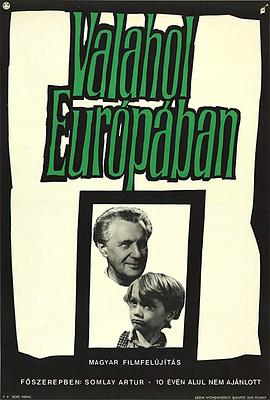
Somewhere in the remote region, the war ends. In the midst of ruined cities and houses in the streets, in rural hamlets, everywhere where people still live, are children who have lost their homes and parents. Abandoned, hungry, and in rags, defenseless and humiliated, they wander through the world. Hunger drives them. Little streams of orphans merge into a river which rushes forward and submerges everything in its path. The children do not know any feeling; they know only the world of their enemies. They fight, steal, struggle for a mouthful of food, and violence is merely a means to get it. A gang led by Cahoun finds a refuge in an abandoned castle and encounters an old composer who has voluntarily retired into solitude from a world of hatred, treason, and crime. How can they find a common ground, how can they become mutual friends? The castle becomes their hiding place but possibly it will also be their first home which they may organize and must defend. But even for this, the price will be very high.To this simple story, the journalist, writer, poet, scriptwriter, movie director, and film theoretician Béla Balázs applied many years of experience. He and the director Géza Radványi created a work which opened a new postwar chapter in Hungarian film. Surprisingly, this film has not lost any of its impact over the years, especially on a profound philosophical level. That is to say, it is not merely a movie about war; it is not important in what location and in what period of time it takes place. It is a story outside of time about the joyless fate of children who pay dearly for the cruel war games of adults.At the time it was premiered, the movie was enthusiastically received by the critics. The main roles were taken by streetwise boys of a children's group who created their roles improvisationally in close contact with a few professional actors, and in the children's acting their own fresh experience of war's turmoil appears to be reflected. At the same time, their performance fits admirably into the mosaic of a very complex movie language. Balázs's influence revealed itself, above all, in the introductory sequences: an air raid on an amusement park, seen in a montage of dramatic situations evoking the last spasms of war, where, undoubtedly, we discern the influence of classical Soviet cinematography. Shooting, the boy's escape, the locomotive's wheels, the shadows of soldiers with submachine guns, the sound of a whistle—the images are linked together in abrupt sequences in which varying shots and expressive sharp sounds are emphasized. A perfectly planned screenplay avoided all elements of sentimentality, time-worn stereotypes of wronged children, romanticism and cheap simplification. The authors succeeded in bridging the perilous dramatic abyss of the metamorphosis of a children's community. Their telling of the story (the scene of pillaging, the assault on the castle, etc) independently introduced some neorealist elements which, at that time, were being propagated in Italy by De Sica, Rossellini, and other film artists. The rebukes of contemporary critics, who called attention to "formalism for its own sake" have been forgotten. The masterly art of cameraman Barnabás Hegyi gives vitality to the poetic images. His angle shots of the children, his composition of scenes in the castle interior, are a living document of the times, and underline the atmosphere and the characters of the protagonists. The success of the picture was also enhanced by the musical art of composer Dénes Buday who, in tense situations, inserted the theme of the Marseilaise into the movie's structure, as a motive of community unification, as an expression of friendship and the possibility of understanding.Valahol Europaban is the first significant postwar Hungarian film. It originated in a relaxed atmosphere, replete with joy and euphoria, and it includes these elements in order to demonstrate the strength of humanism, tolerance, and friendship. It represents a general condemnation of war anywhere in the world, in any form.
提示:[DVD:720P清晰完整版] [BD:1080P高清完整版] [HD:高清无删减版],BD和HD版本不太适合网速过慢的手机在线观看。
猜你喜欢
相关推荐
- HD3.0
暴风雨中,3名女子学校的学生被困在地下坑里,他们必须直面各自的内心冲突,奋力求生。
- HD4.0
20世纪初,在一场致命的牛仔竞技后,罗莎与她的情人踏上逃亡之路,穿越意大利荒野,试图摆脱追捕。他们的身后,是传奇人物“水牛比尔”——他不仅是追踪者
- 中文字幕10.0
主人公是一个出身贫寒的普通宅男,他的青梅竹马是勇太。两人外表相仿,唯一的区别是勇太出身富裕。某天,勇太宣布要迎娶一位美丽动人的女子,而这位女子正是
- 中文字幕10.0
由于丈夫是个工作狂,莫娜米身心俱疲,倍感孤独。当她遇到丈夫的下属松本时,这种孤独感更加难以排解。她发现松本正偷瞄她丰满的胸部。当丈夫醉酒睡着后,她
- 中文字幕10.0
她原本计划暑假去海边度假,但不知为何去不了了。她的继母一直盼望着能穿上泳衣去海边,但或许是有些失望,便在家试穿。达也偷窥了她,结果被她发现了。之后
- HD3.0
约翰.保曼在三十年前已拍出具现代感觉的动作片,堪称时代先躯。六十年代动作巨星李.马文饰演一名黑道悍将,他被不忠的妻子和她的歹徒男友合谋枪杀,但大难
- 中文字幕2.0
奈绪嫁给了一个比她大十岁的男人,起初她被他截然不同的性格所吸引,但如今他们的关系却十分紧张。为了排解孤独,她自愿参加了一次婚外情之旅。在那里,一个
- 中文字幕3.0
2025 / 日本 / 真白实久留
- 中文字幕5.0
我婆婆一直梦想着出演成人影片,结果在拍摄现场意外遇到了她的女婿——一位制片公司的导演。他试图劝她回家,但她坚持说自己是来工作的
- 中文字幕7.0
那个骂我没用的女人,我的老板,长得挺漂亮,但性格实在太难相处了。我总是幻想能和那个瞧不起我的傲慢女人发生关系。后来,一个绝佳的机会出现了,我决定把
- 中文字幕2.0
夏部和辰浪在工作中保持着婚外情。一天,他们的关系即将结束,辰浪却说:“我老婆怀孕了,所以我想分手。”他们都知道这段关系终会结束。但因为夏部爱着辰浪
- 中文字幕3.0
藤井因为工作失误不得不加班,结果留下来检查藤井的工作。然而,工作似乎遥遥无期,办公室里的空气也像空调坏了一样闷热难耐,这时,老板开始解开自己的扣子
- HD中字5.0
在从拘留中心获释后,无证移民艾莎搬到了纽约市,发誓要逃离追逐她的种种困境。在皇后区,她爱上了刚退伍的军人斯金纳,他们互相扶持,共同面对在美国开始新
- HD1.0
1977年,在被军事独裁统治折磨的巴西,四十多岁的马塞洛逃离了他混乱的过去,来到累西腓,希望在这里建立新的生活并与家人重修旧好。然而,他并未料到死
- HD4.0
露丝·威尔森、库什·珍宝、裴淳华正商谈主演改编自大热音乐剧《The Band》的新片[最伟大的时光](Greatest Days,暂译)。影片由科
- 中文字幕6.0
一位日本女大学生回忆起与变态男子相遇时的兴奋之情,并渴望重温那一刻……一位沉迷于变态性爱的年轻性欲狂的颓废性爱体验
- 中文字幕2.0
新晋妈妈因无法进行期待已久的暑假旅行而感到沮丧。她心疼自己精心准备的泳衣,便在家中试穿,却被继子真也偷窥。偷看被抓后,真也应继母的要求,在她身上涂
影片评论
耶~~复制成功